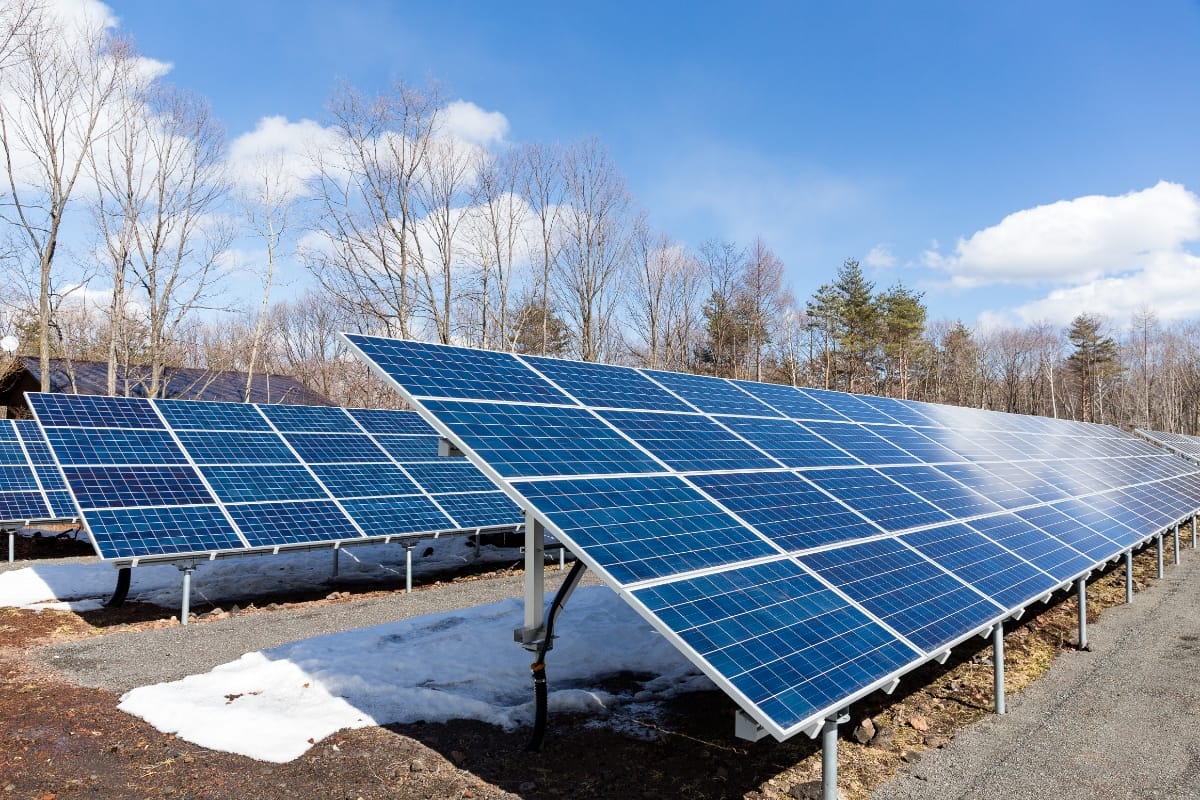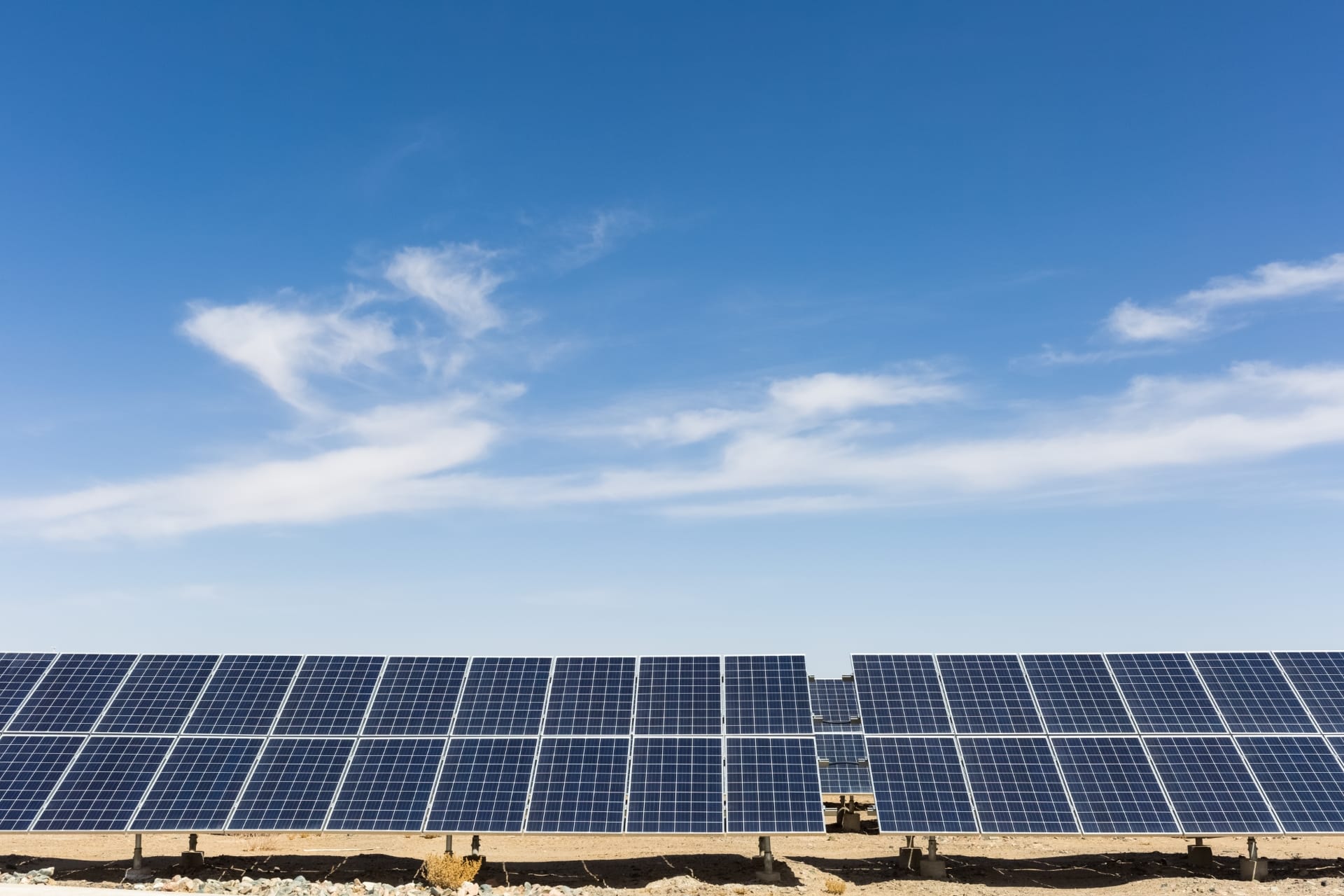

Axminster is an East Devon market town on the River Axe, close to the borders with Dorset and Somerset and surrounded by rolling farmland. With so much open country around it, ground-mounted arrays are a common sight, alongside panels on homes, barns and farm buildings.
Solar Cleaning South West cleans every type of system around Axminster, from small domestic roofs to rows of panels in a field. We use purified water and soft brushes only, so nothing harsh touches the glass or runs into the ground.
Solar panels lose output gradually as they get dirty, which is exactly why the loss goes unnoticed. There is no warning light. Generation just drifts down month by month, and with it the value you get from the system.
It is easy to blame the weather for a poor month, and sometimes that is fair. But if this summer looks weaker than last summer on similar days, dirt is one of the first things worth ruling out. A clean is a simple way to find out.
Left long enough, heavy build-up can start to affect the system itself, not only its output. Dirt and growth that hold moisture against the frames are worth removing before they settle in. A clean once or twice a year is usually enough to stop that happening.
Many owners only notice the problem when they compare their figures with a neighbour’s, or when an inverter app shows a steady slide over a year. If that sounds familiar, a clean is the simplest first step before calling anyone out to look at the system itself.
Field arrays sit closer to the dirt. Soil splashes onto the lower rows in heavy rain, dust drifts over from tracks and farm work, and birds land on them freely. The front edges of each row usually suffer most, and long grass can creep up to shade the bottom cells too.
We clean field arrays with the same purified water and soft brushes we use on roofs, so nothing harsh runs into the ground below. That matters where animals graze or crops grow nearby. Keeping the grass trimmed around the frames between cleans helps the panels make the most of the light.
Our skilled cleaners have years of experience. They deliver exceptional results every time.
We use biodegradable solutions. These are safe for your family, pets, and the environment.
We pride ourselves on our customer service. We ensure you're happy with our work before we leave.
Output drops over time as dirt builds up, reducing what the system gives you. In extreme cases, heavy build-up can affect the components.
Yes. Our IPAF and PASMA training means we can use powered access or a mobile tower where needed.
No. We clean small domestic systems as well as large arrays.
Yes. We use purified water only, with nothing added.
It helps, but it is not essential. We can work around most things on the day.
Yes. Just include every set of panels when you ask for a quote.
Around Axminster, plenty of solar sits on agricultural buildings: cattle sheds, machinery stores and big open barns. These roofs face more dust and bird activity than a house roof, and many of them are low-pitched, so dirt does not wash off easily.
They also need careful access. Fibre cement sheets and rooflights are not safe to walk on, so we plan the approach before we arrive, using water-fed poles from the ground, a mobile access tower or a powered access platform. We also agree with you where vehicles and stock need to move, so the clean fits around the working day.
On mixed farms, panels on livestock buildings can also pick up dust from feed and bedding, which is fine and light but clings to the glass once it gets damp. Purified water lifts it easily without anything that could bother the animals.
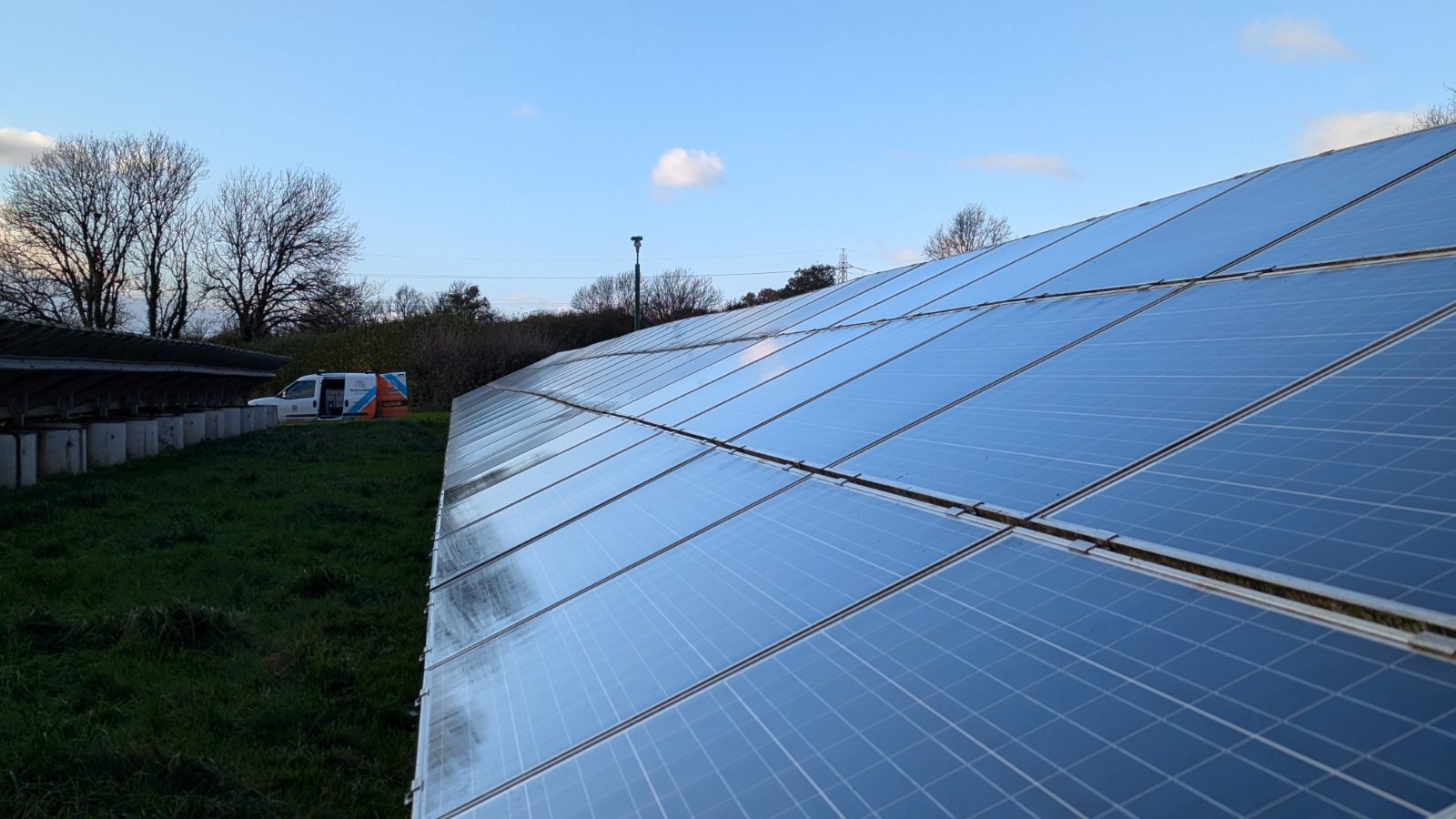
This ground-mounted array is typical of the rural systems we clean. Rows like these collect dust from the land around them, and the lowest edges take the brunt of rain splash. When we arrived, the top of each panel was dusty but reasonably clear, while the bottom edges carried a band of dried soil and grime.
We started at one end and moved along each row with soft brushes and purified water, spending extra time on the lower edges where the dirt was thickest. Rather than pressing harder, we let the water soak into the dried patches for a moment before brushing them away.
The rows were rinsed one by one and left to dry, with nothing left on the glass or washed into the grass underneath. When we finished, the whole array was an even colour from the top edge to the bottom, with the lower cells uncovered again.
We trained with the International Solar Cleaning Academy (ISCA) to clean solar panels the right way. For barns and taller roofs, we also hold IPAF and PASMA training, covering powered access platforms and mobile access towers.
Farm customers often tell us they value that we fit in around them and leave the yard as we found it.
Let us know where the panels are mounted and how many you have, and we will quote a fixed price with no obligation. Questions first? Ring 0117 205 2967.
Request a personalized quote tailored to your solar cleaning needs. Contact SolarCleanings for a detailed, no-obligation estimate today!